




menu

Water Softener & Filtration Systems in Columbus – Protecting Your Home from Hard Water Damage and Mineral Buildup

Custom whole house water treatment solutions engineered for Columbus water chemistry, delivering scale-free plumbing, healthier water for your family, and protection against premature fixture and appliance failure.

Slider Image 1
Slider Image 2
Slider Image 3
Slider Image 4
Slider Image 5
Slider Image 7
Slider Image 8
Slider Image 9
Slider Image 10
Slider Image 11

Why Columbus Water Destroys Your Plumbing Faster Than You Think

Columbus draws its municipal water supply from the Scioto River and Big Walnut Creek, both of which carry elevated levels of dissolved calcium, magnesium, and iron. This creates moderately hard to hard water conditions throughout Franklin County, with hardness levels consistently measuring between 180 and 240 milligrams per liter. You see the evidence on your faucets, showerheads, and glass shower doors. White scale, cloudy film, and soap scum that scrubbing cannot remove.

But the visible buildup is only the beginning. Inside your water heater, mineral deposits settle at the bottom of the tank, creating a thermal barrier that forces the heating element to work harder and fail faster. Inside your pipes, scale gradually narrows the diameter, reducing water pressure and creating pockets where corrosion accelerates. Your dishwasher, washing machine, and ice maker all suffer shortened lifespans when fed untreated Columbus water.

Hard water also interferes with soap chemistry. You use more detergent, shampoo, and dish soap to achieve basic cleaning results. Your skin feels dry and irritated. Your hair looks dull. Clothing fades and stiffens prematurely.

A whole house water treatment system addresses these problems at the point of entry, before hard water reaches any fixture or appliance. Water conditioning systems remove calcium and magnesium through ion exchange, while residential water purification removes chlorine, sediment, and other contaminants. Home water filtration systems extend appliance life, improve water taste, and reduce your annual maintenance costs.

Why Columbus Water Destroys Your Plumbing Faster Than You Think
How We Engineer Water Conditioning Systems for Columbus Water Chemistry

How We Engineer Water Conditioning Systems for Columbus Water Chemistry

Generic water softeners fail because they are not calibrated for your specific water supply. We start every installation with a comprehensive water analysis that measures total dissolved solids, hardness, iron content, pH level, and chlorine concentration. Columbus water presents unique challenges depending on whether you receive water from Dublin Road, Parsons Avenue, or Hap Cremean Water Plants, each of which treats water differently.

Based on lab results, we select the appropriate resin capacity, regeneration frequency, and media type for your household water consumption. High-efficiency water softeners use metered regeneration, which means the system only regenerates based on actual water use, not arbitrary timers. This reduces salt consumption and wastewater discharge.

For homes with elevated iron levels, we install a pre-filter sediment trap or an oxidizing filter ahead of the softener resin tank. Iron fouls standard resin beads, creating channeling and reducing the system's capacity to remove hardness minerals. A multi-stage approach prevents premature resin failure.

We pair softening with activated carbon filtration to remove chlorine and volatile organic compounds. Municipal water treatment plants use chlorine to disinfect water, but chlorine degrades rubber gaskets, o-rings, and valve seals inside appliances. Carbon filtration also improves taste and odor, making tap water more palatable.

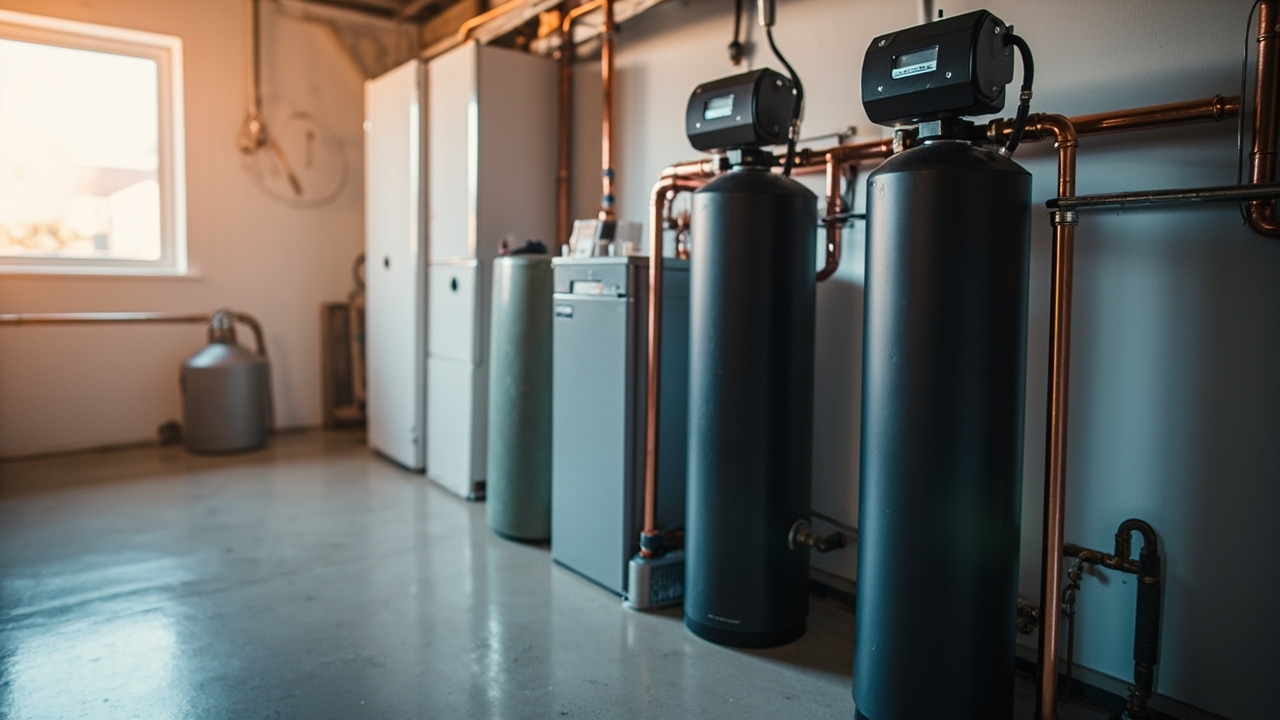
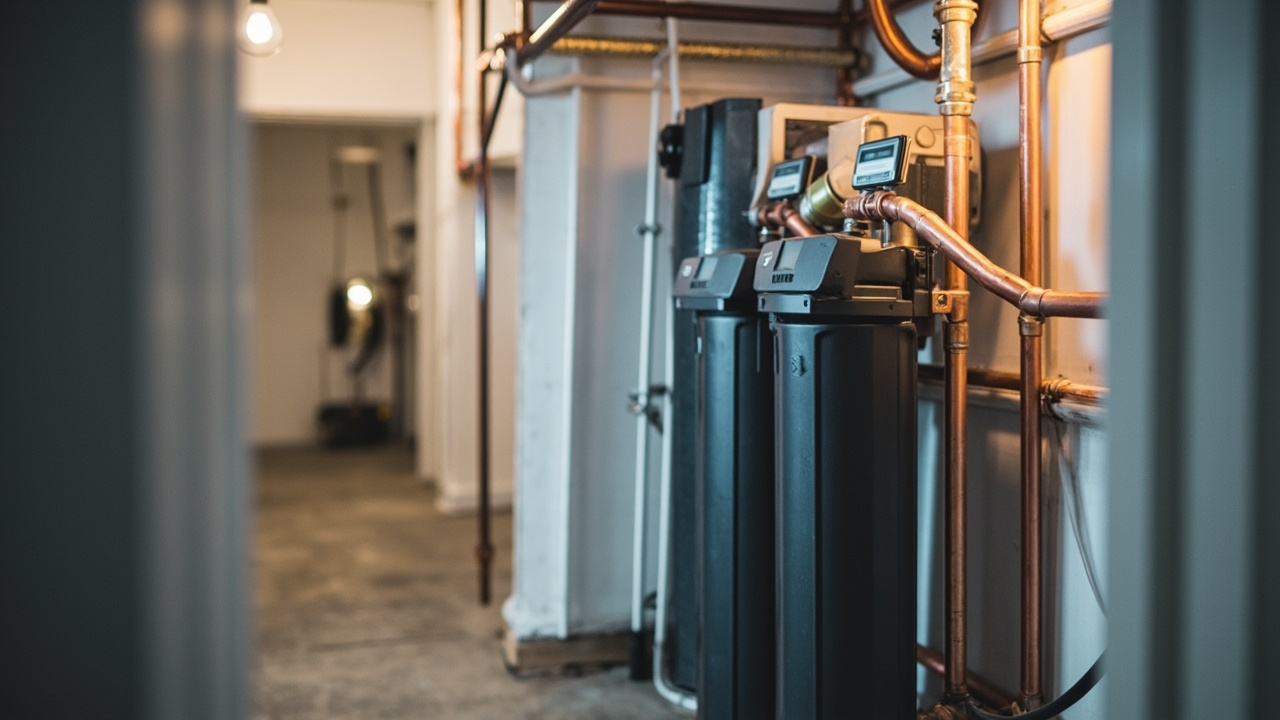
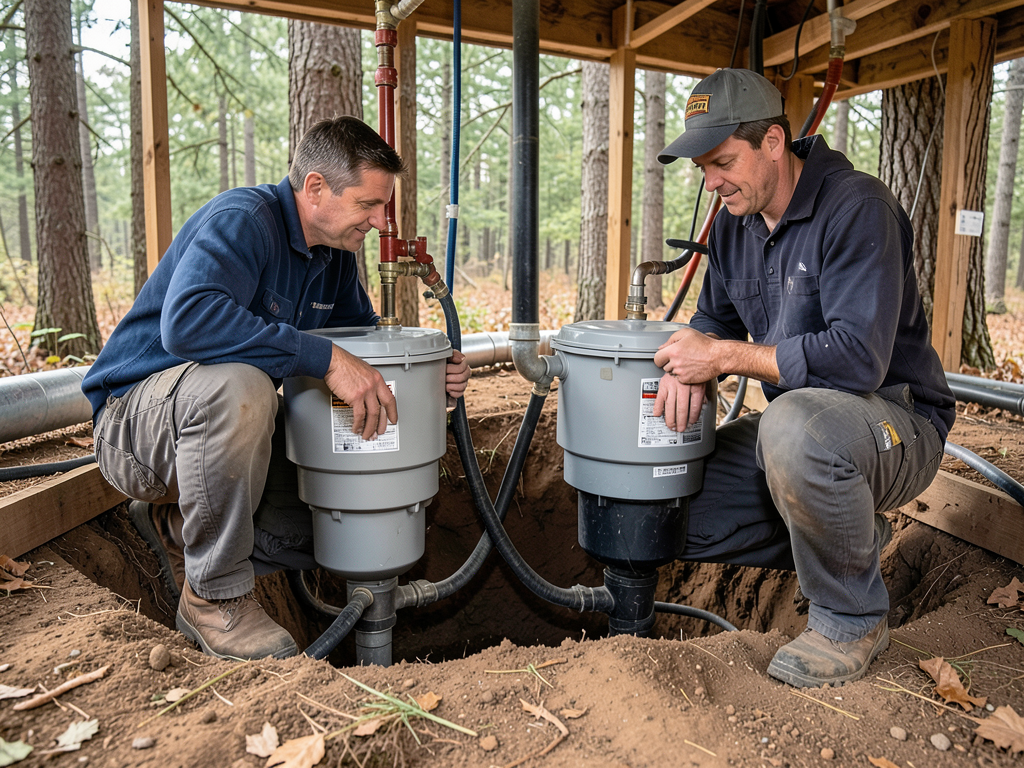
The system is installed on the main water line immediately after the pressure regulator and shut-off valve. We install a bypass loop so the system can be isolated for maintenance without shutting off water to the entire home. The drain line is routed to a proper air gap to comply with Ohio Plumbing Code 4101:3-6.

What the Installation Process Actually Looks Like

Water Softener & Filtration Systems in Columbus – Protecting Your Home from Hard Water Damage and Mineral Buildup
01

Water Testing and System Sizing

We collect water samples from multiple taps and send them to a certified lab for analysis. The results determine hardness level, total dissolved solids, iron content, and pH balance. We calculate your household's daily water consumption based on occupancy, fixture count, and usage patterns. This data drives the selection of resin capacity, brine tank size, and regeneration cycle timing. Proper sizing prevents undersized systems from running constant regeneration cycles or oversized systems from allowing water to stagnate in the tank.
02

Main Line Installation

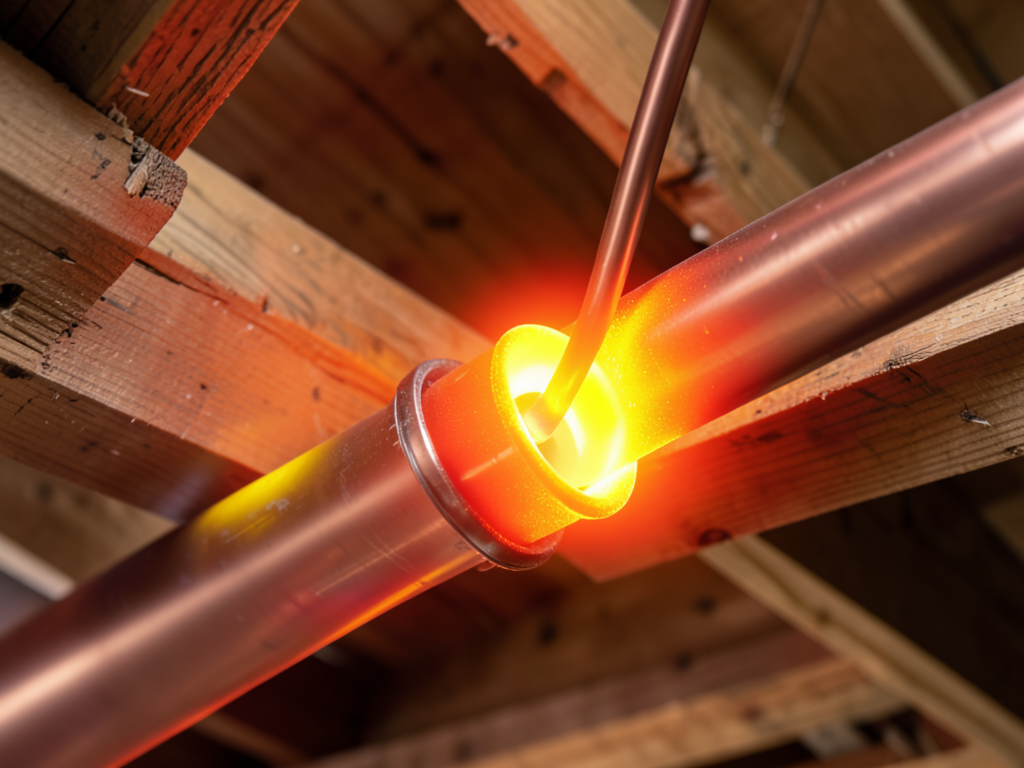
We shut off the main water supply and cut into the line after the meter and pressure regulator. The softener head valve is installed with compression fittings or copper sweat joints, depending on your existing pipe material. We install a three-valve bypass system so the softener can be isolated without disrupting household water flow. The brine tank is positioned within six feet of the control valve to allow proper draw during regeneration. A dedicated 110-volt outlet is installed if needed. The drain line is routed to a laundry sink, floor drain, or sump with an air gap to prevent backflow contamination.
03

Programming and Water Quality Verification

We program the control valve with your specific water hardness level, iron content, and regeneration schedule. The system is manually cycled through a regeneration to verify proper backwash, brine draw, and rinse operation. We test the treated water with a hardness test kit to confirm the softener is removing minerals to target levels, typically reducing hardness to zero grains per gallon. You are shown how to add salt, adjust settings, and recognize when the system needs maintenance. We provide a written record of all settings and test results for future reference.

Why Columbus Homeowners Trust First Choice Plumbing Columbus for Hard Water Treatment Systems

Columbus water conditions vary block by block depending on infrastructure age, pipe material, and proximity to treatment plants. Homes in German Village and Victorian Village face additional challenges with galvanized steel and cast iron supply lines that leach iron and rust into the water. Newer developments in Hilliard and Dublin have copper and PEX plumbing but still receive hard water from the municipal supply.

We have installed water conditioning systems in every Columbus neighborhood and understand how local water chemistry interacts with different plumbing materials. We know that homes with older galvanized lines need iron filtration ahead of the softener resin. We know that Columbus water pH typically sits around 7.8, which is mildly alkaline and causes scale buildup on heat exchanger surfaces.

We also understand Ohio Plumbing Code requirements for backflow prevention, drain line air gaps, and pressure relief valves. Inspectors in Franklin County enforce these rules strictly, and improper installation can result in failed inspections or voided home sale transactions.

First Choice Plumbing Columbus sources equipment from manufacturers who provide local parts availability and technical support. We do not install proprietary systems that lock you into expensive service contracts or force you to buy salt and filters from a single supplier. You own the system outright and can service it independently if you choose.

We provide transparent information about salt-based versus salt-free systems, reverse osmosis add-ons, and UV sterilization. We explain the trade-offs so you can make an informed decision based on your water quality, household needs, and budget. Our goal is to solve your water problem correctly the first time, not upsell you on features you do not need.

What You Can Expect from Professional Water Treatment Installation

Installation Timeline and Preparation

Most installations are completed in four to six hours depending on accessibility and the complexity of your plumbing layout. We ask you to clear a path to the main water line and provide access to an electrical outlet within six feet of the installation location. If your home has a crawl space or utility room with low clearance, we may need additional time to position equipment safely. We schedule installations on weekdays to avoid weekend price premiums and ensure parts suppliers are open if we encounter unexpected conditions. Your water is shut off for two to three hours during the actual pipe cutting and valve installation, so plan accordingly.

Water Analysis and Equipment Selection

We perform on-site water hardness testing using titration kits that measure grains per gallon. For comprehensive analysis, we collect samples in sterile bottles and send them to a certified lab that tests for total dissolved solids, iron, manganese, sulfur, pH, and chlorine levels. Lab results take three to five business days. Based on results, we recommend specific resin capacity, tank size, and filtration media. If your water contains high iron, we add a sediment filter or oxidizing pre-filter. If chlorine taste is a concern, we integrate an activated carbon filter. You receive a written report with all test results and equipment specifications before any work begins.

System Performance and Water Quality Improvement

Within 24 hours of installation, you notice the difference. Water feels slicker in the shower because soap lathers more efficiently without competing against calcium ions. Dishes come out of the dishwasher without spots. Coffee and tea taste cleaner without chlorine interference. Scale buildup stops forming on faucets and showerheads. Your water heater operates more efficiently because the heating element is not insulated by mineral deposits. Appliances like washing machines and ice makers last longer because internal components are not clogged with sediment. You use less soap, shampoo, and detergent because soft water requires smaller amounts to achieve the same cleaning results.

Maintenance Requirements and System Longevity

Water softeners require minimal maintenance. You refill the brine tank with salt every four to eight weeks depending on water usage. We recommend using high-purity salt pellets or solar salt crystals to prevent bridging and mushing inside the tank. Once a year, we perform a system inspection to check the resin bed condition, verify the regeneration cycle timing, and clean the brine tank. The control valve contains internal seals and spacers that may need replacement every five to seven years depending on water quality. Resin beds last 10 to 15 years in typical Columbus water conditions. Carbon filters require replacement every six to 12 months depending on chlorine levels and household water consumption.

Frequently Asked Questions

You Have Questions,
We Have Answers

Why Columbus Water Chemistry Makes Whole House Water Treatment Essential

Columbus relies on surface water from the Scioto River and Big Walnut Creek, both of which flow through limestone bedrock that dissolves calcium and magnesium into the water supply. This geological feature creates hardness levels that damage plumbing infrastructure faster than in cities with well water or softer surface sources. The city adds chlorine and fluoride during treatment, but hardness minerals remain. Homes built before 1980 are particularly vulnerable because copper and galvanized steel corrode faster when exposed to hard water with a high mineral content. The combination of moderate hardness and chlorine accelerates scale buildup on heat exchangers, water heaters, and fixture aerators.

Columbus building codes require backflow prevention and proper drainage for water treatment systems, but enforcement varies by neighborhood. First Choice Plumbing Columbus installs every system to meet Ohio Plumbing Code 4101:3-6 standards for point-of-entry treatment devices. We understand Franklin County inspection protocols and ensure drain lines, air gaps, and pressure relief valves are installed correctly the first time. Our familiarity with local water quality issues means we can diagnose problems other contractors miss, like iron staining caused by aging municipal infrastructure or pH imbalances that accelerate copper pipe corrosion. Choosing a plumber who understands Columbus water conditions protects your investment and prevents future repair costs.
Plumbing Services in The Columbus Area

We are proud to serve the entire Columbus area and its surrounding communities. Our team is strategically located to respond quickly to your plumbing needs, whether you're in the city center or a nearby suburb. We invite you to view our service area on the map to see if you are within our coverage. No matter where you are, we’re ready to bring our expertise directly to your doorstep.

Address:
First Choice Plumbing Columbus, 4770 Indianola Ave, Columbus, OH, 43214

Additional Services We Offer

Our news updates

Latest Articles & News from The Blogs

Identifying the Strange Clicking Noises Coming from Your Mount Vernon Plumbing Pipes Those mysterious clicking or tapping sounds coming from…

Identifying the Strange Clicking Noises Coming from Your Mount Vernon Plumbing Pipes

Identifying the Strange Clicking Noises Coming from Your Mount Vernon Plumbing Pipes Those mysterious clicking or tapping sounds coming from…

Why a Standard Sump Pump Might Not Be Enough for Your Northern Woods Basement

Why a Standard Sump Pump Might Not Be Enough for Your Northern Woods Basement Living in Northern Woods means dealing…

Adding a Modern Dog Wash Station to Your Columbus Mudroom or Garage (What You Need to Know)

Why Columbus Pet Owners Are Adding Dog Wash Stations to Their Homes Adding a modern dog wash station to your…

Contact Us

Call First Choice Plumbing Columbus at (614) 707-7373 to schedule a free water quality analysis. We will test your water, explain your options, and provide a detailed estimate for a custom water treatment system tailored to your home and water chemistry.