



menu

Industrial Pipe Repair in Columbus | Minimizing Downtime for Mission-Critical Operations

When your industrial piping system fails, every minute of downtime costs money. First Choice Plumbing Columbus delivers rapid industrial pipe repair with specialized process piping expertise to keep your Columbus facility operational and compliant.

Slider Image 1
Slider Image 2
Slider Image 3
Slider Image 4
Slider Image 5
Slider Image 7
Slider Image 8
Slider Image 9
Slider Image 10
Slider Image 11

Why Industrial Pipe Failures Happen More Often in Columbus Manufacturing Facilities

Columbus's industrial corridor faces unique piping challenges that accelerate system degradation. The region's freeze-thaw cycles create expansion and contraction stress on process piping systems, particularly in facilities without climate-controlled production areas. Underground industrial pipelines experience additional stress from Ohio's expansive clay soil, which shifts during wet seasons and places lateral pressure on buried runs.

The concentration of food processing, automotive manufacturing, and chemical production in the Columbus metro means process piping systems handle corrosive materials, high-temperature fluids, and abrasive slurries. These demanding applications accelerate wear on pipe interiors, joints, and support systems. Schedule 40 carbon steel piping, common in older Columbus facilities built during the 1970s and 1980s industrial expansion, now shows widespread thinning and perforation.

Most industrial pipeline repair needs stem from predictable failure points. Welded joints crack under thermal cycling. Flanged connections develop leaks when gaskets degrade from chemical exposure. Threaded connections in high-vibration areas work loose over time. Valve seats erode when handling particulate-laden fluids.

The cost impact goes beyond the repair itself. Production shutdowns trigger missed delivery deadlines, idle labor, and potential contract penalties. Unplanned failures create safety hazards and environmental compliance risks. When a process line fails during second shift, finding qualified industrial piping repair services becomes urgent.

Columbus facilities need industrial pipe restoration providers who understand the relationship between piping metallurgy, operating conditions, and local environmental factors. Generic plumbing contractors lack the expertise to properly assess industrial piping systems or execute compliant repairs. Industrial pipe rehabilitation requires specific knowledge of ASME B31.3 process piping code, material compatibility, and non-destructive testing methods.

Why Industrial Pipe Failures Happen More Often in Columbus Manufacturing Facilities
How Professional Industrial Pipeline Repair Differs from Standard Plumbing

How Professional Industrial Pipeline Repair Differs from Standard Plumbing

Industrial piping repair starts with proper system isolation and lockout-tagout procedures. We coordinate with your operations team to identify isolation points that minimize affected production areas. For process piping systems, this means understanding which valves provide true isolation and verifying zero-energy state before beginning work.

Diagnostic assessment uses methods standard plumbers never employ. Ultrasonic thickness testing identifies wall loss in carbon steel and stainless piping. Dye penetrant testing reveals surface cracks invisible to visual inspection. Radiographic examination verifies weld integrity on critical joints. These non-destructive testing methods provide data for determining whether localized repair suffices or if complete section replacement becomes necessary.

Material selection separates competent industrial pipe repair from amateur attempts. We match replacement materials to existing pipe specifications and service conditions. Schedule 80 piping replaces failed Schedule 40 sections when operating pressures warrant the upgrade. 316 stainless steel addresses corrosion issues that compromised 304 stainless installations. Proper material selection prevents repeat failures.

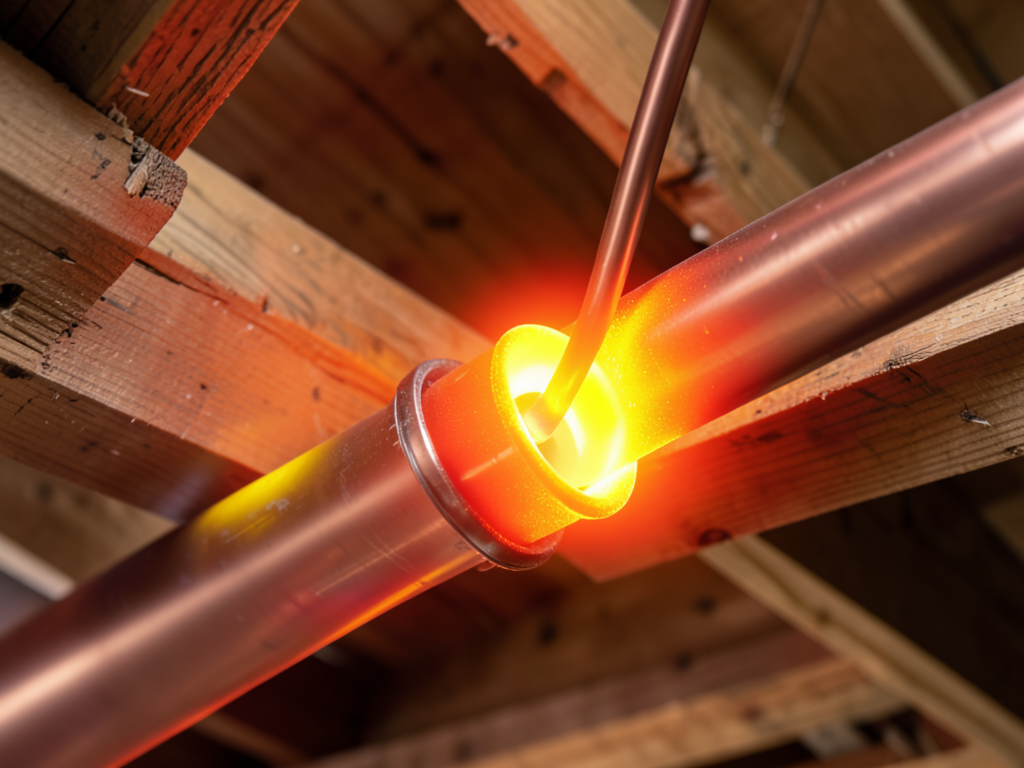
Welding procedures follow qualified weld procedure specifications. Our welders maintain certifications for the specific materials and joint configurations in your system. We use appropriate filler metals, preheat temperatures, and post-weld heat treatment when metallurgy requires it. Pipe supports get evaluated and upgraded when misalignment or inadequate support contributed to the original failure.

Pressure testing and commissioning verify repair integrity before returning the system to service. Hydrostatic testing confirms leak-free operation at 150 percent of maximum operating pressure. We provide documentation of all testing, materials used, and welding certifications. This documentation becomes part of your facility's piping system records and satisfies inspector requirements during compliance audits.

What Happens During an Industrial Pipe Repair Project

Industrial Pipe Repair in Columbus | Minimizing Downtime for Mission-Critical Operations
01

Emergency Assessment and Isolation

When you contact us about a piping failure, we dispatch technicians with industrial system experience to your Columbus facility. They evaluate the failure location, coordinate with your maintenance team on safe isolation procedures, and develop a repair plan that considers your production schedule. For active leaks, temporary repairs minimize damage while we prepare for permanent restoration work.
02

Precision Repair Execution

Repairs proceed using appropriate welding procedures, material specifications, and quality control measures. We maintain clean work areas to prevent contamination in food-grade or pharmaceutical piping systems. All welding meets ASME Section IX requirements. Pipe supports get reinforced or repositioned when stress analysis indicates the original configuration contributed to failure. Work proceeds efficiently to minimize your downtime window.
03

Testing and Documentation

Before releasing the system back to operations, we conduct pressure testing to verify repair integrity. You receive complete documentation including material certifications, welder qualifications, test results, and as-built drawings showing any configuration changes. This documentation supports your compliance requirements and provides maintenance records for future reference. We coordinate with your team during startup to confirm normal operation.

Why Columbus Facilities Trust First Choice Plumbing Columbus for Critical Piping Work

Industrial facilities cannot afford learning curves when piping systems fail. You need technicians who have seen your specific type of failure before and know the correct repair approach. First Choice Plumbing Columbus brings industrial piping expertise developed across hundreds of Columbus facility repairs.

We understand the local industrial landscape. Columbus manufacturing facilities include food processors subject to FDA requirements, automotive suppliers operating under IATF 16949 quality systems, and chemical plants regulated by EPA and OSHA process safety management standards. Each industry brings specific compliance requirements that affect how piping repairs get executed and documented.

Our familiarity with Columbus building and mechanical codes streamlines permit acquisition when required. We know which repairs need inspection and which fall under routine maintenance exemptions. This knowledge prevents delays and keeps your project moving forward.

Process piping repair often happens during limited maintenance windows. Weekend shutdowns, holiday breaks, and summer production lulls provide narrow opportunities for repair work. We staff appropriately to complete repairs within your available timeframe. When a Wednesday afternoon failure threatens Friday delivery commitments, we mobilize the resources needed to restore operation.

Material sourcing capability matters during emergency repairs. Our relationships with Columbus industrial supply houses provide rapid access to piping, fittings, gaskets, and specialty materials. We stock common items like Schedule 80 carbon steel pipe, 316 stainless fittings, and high-temperature gasket material. For unusual materials, we leverage supplier networks to obtain what your repair needs.

Safety performance matters when contractors work in your facility. Our technicians complete site-specific safety training and follow your facility procedures. We maintain general liability coverage and workers compensation insurance at levels industrial clients require. You receive certificates of insurance before work begins.

What Industrial Clients Should Expect from Professional Pipe Repair Services

Response Time and Scheduling

Emergency industrial pipe failures receive same-day response throughout the Columbus metro area. We maintain on-call technicians who can reach most facilities within two hours of your call. For planned repairs during scheduled maintenance windows, we coordinate timing weeks in advance and confirm crew availability. Large projects requiring multiple welders or extended work duration get scheduled to align with your production calendar. We understand that every hour of unplanned downtime carries substantial cost, so we treat industrial pipeline repair as the business-critical service it represents.

Initial Evaluation and Scope Definition

Assessment begins with understanding the failure mechanism, not just the visible damage. We examine operating conditions, review maintenance history when available, and evaluate surrounding piping for similar deterioration. Ultrasonic testing reveals whether wall thinning extends beyond the visible failure point. This diagnostic approach prevents incomplete repairs that fail shortly after returning to service. You receive a detailed scope of work that explains what needs repair, why that approach makes sense, and what timeframe the work requires. Cost estimates separate labor, materials, and testing so you understand exactly what you pay for.

Quality of Completed Work

Industrial pipe restoration work meets or exceeds original installation standards. Welds receive visual inspection and non-destructive testing appropriate to the service. Pressure tests verify leak-free operation before handoff. Pipe hangers and supports get adjusted to eliminate stress concentrations that contributed to the original failure. You get a repair that returns the piping system to reliable operation, not a temporary patch that fails during the next production cycle. Our work satisfies insurance inspectors, regulatory auditors, and most importantly, your operations team who depend on the piping system daily.

Documentation and Compliance Support

Every industrial piping repair project generates documentation that supports your compliance and maintenance record requirements. You receive material certifications showing pipe and fittings meet specification, welder qualification records proving technician competency, and pressure test results confirming repair integrity. Photographic documentation shows before, during, and after conditions. For facilities with quality management systems, we provide documentation in whatever format your procedures require. This paperwork becomes part of your permanent facility records and satisfies auditor questions about piping system modifications. When insurance inspectors or regulatory agencies ask about repairs, you have complete documentation.

Frequently Asked Questions

You Have Questions,
We Have Answers

How much does it typically cost to fix a broken pipe? +

Industrial pipe repair costs depend on pipe diameter, material, location accessibility, and failure severity. A minor weld repair on exposed carbon steel may run differently than rehabilitating corroded underground process lines. Columbus facilities face seasonal freeze-thaw cycles that stress joints and welds, increasing emergency repair frequency. System downtime drives total cost more than labor rates. Expect pricing to reflect whether your operation requires hot taps to avoid shutdown, specialized materials for chemical compatibility, or compliance with local industrial codes. Request detailed assessments that account for production loss, not just repair labor.

What is the best way to fix a leaking pipe? +

The best repair method depends on pipe function, material, and operating conditions. Welded repairs work for high-pressure steam or process lines where structural integrity matters. Epoxy lining suits potable water or low-pressure drainage systems. Mechanical clamps offer fast fixes on non-critical lines. Columbus industrial facilities running three-shift operations need solutions that minimize downtime. Chemical plants require materials resistant to corrosive environments. HVAC condensate lines demand different approaches than wastewater discharge piping. Professional assessment identifies the root cause, whether corrosion, mechanical stress, or installation defects, then matches repair technology to your operational requirements.

How long does epoxy pipe repair last? +

Epoxy pipe lining typically lasts 30 to 50 years in industrial applications when properly installed. Longevity depends on substrate preparation, curing conditions, and operating parameters. High-temperature process lines or aggressive chemical exposure reduce lifespan. Columbus humidity affects curing times and bond strength during installation. Systems operating below 180 degrees Fahrenheit with stable chemistry see longest performance. Abrasive slurries or thermal cycling degrade epoxy faster. The repair quality matters more than product claims. Poor surface prep or incomplete curing causes premature failure. Expect manufacturers to void warranties if installation deviates from specifications or operating conditions exceed design limits.

How much should it cost to fix a leaking pipe? +

Leak repair costs reflect pipe size, system pressure, accessibility, and required downtime coordination. Small leaks on accessible carbon steel lines cost less than repairing buried stainless process piping. Columbus industrial operations face premium pricing for after-hours or weekend work to avoid production interruptions. Emergency repairs during equipment failures run higher than scheduled maintenance. Budget for diagnostic costs including pressure testing and metallurgical analysis if corrosion caused failure. Costs increase when repairs require confined space entry, hot work permits, or environmental controls. Focus on total cost of ownership, including production loss and future failure risk, not just immediate repair invoices.

Is it cheaper to replace or repair pipes? +

Replacement makes financial sense when pipes show systemic corrosion, repeated failures, or cannot meet current operational demands. Repair works for isolated damage on otherwise sound piping. Columbus facilities with aging infrastructure must weigh repair frequency against replacement capital costs. A 40-year-old galvanized water line experiencing multiple pinhole leaks justifies replacement. Single weld failure on newer stainless steel merits targeted repair. Calculate downtime costs for both options. Replacement requires longer shutdowns but eliminates near-term failure risk. Analyze remaining asset life, insurance requirements, and whether current piping meets code for your production changes.

Does insurance cover pipe repair? +

Commercial property insurance typically covers sudden, accidental pipe failures but excludes gradual deterioration or maintenance issues. A burst steam line from overpressure qualifies. Slow corrosion from deferred maintenance does not. Columbus facilities must document regular inspection programs to support claims. Policies often exclude earth movement damage unless you purchased specific endorsements. Review your coverage for business interruption losses, which often exceed repair costs. Insurance may require licensed contractors and code-compliant repairs. Failure to maintain systems per manufacturer specifications gives insurers grounds to deny claims. Photograph damage, preserve failed components, and notify carriers immediately.

Does flex seal really stop water leaks? +

Flex Seal and similar retail products fail on industrial piping. These consumer-grade sealants cannot withstand process temperatures, system pressures, or chemical exposure in manufacturing environments. Columbus code enforcement and insurance carriers reject such repairs on commercial systems. A temporary patch on a 150 PSI steam line creates liability when it fails and injures workers. These products lack third-party testing for industrial applications. Use them only for non-pressurized applications like roof drains or secondary containment, never on process piping, potable water, or pressurized systems. Professional repairs use engineered materials with documented performance data and warranty backing.

What can I seal a leaking pipe with? +

Industrial leak repairs require materials matched to service conditions. Epoxy putty works for small leaks on ambient-temperature water lines. Pipe clamps with rubber gaskets seal pinhole leaks temporarily. High-pressure steam lines need welded repairs or engineered compression fittings. Chemical process piping requires compatibility testing before selecting sealants. Columbus facilities face regulatory scrutiny for improper repairs on systems handling hazardous materials. ANSI and ASME codes govern acceptable repair methods for pressurized systems. Use manufacturers' approved repair materials to maintain warranties and insurance coverage. Temporary fixes must include tags warning operators and deadlines for permanent repairs to prevent forgotten patches from failing catastrophically.

How to fix a leaking pipe without removing it? +

Trenchless repair methods fix buried or embedded pipes without excavation. Cured-in-place pipe lining installs epoxy liners through existing access points for gravity drainage systems. Pneumatic point repairs use inflatable bladders to seal localized damage. Pipe bursting replaces lines by fragmenting old pipe while pulling new material through the same path. Columbus industrial sites with limited access or sensitive surface equipment benefit from avoiding excavation costs and site restoration. These methods work best on non-pressurized drainage, process return lines, or low-pressure applications. High-pressure steam or chemical lines typically require traditional excavation for code-compliant welded repairs and proper inspection access.

What is 4 times stronger than epoxy? +

Methacrylate resins cure faster and bond stronger than standard epoxies in certain applications. Polyurea coatings offer superior abrasion resistance for slurry lines. However, strength comparisons mislead without context. Industrial pipe repair success depends on matching material properties to operating conditions, not absolute strength numbers. A repair four times stronger but incompatible with your process chemistry fails immediately. Columbus facilities need solutions that address specific failure modes like corrosion, erosion, or thermal cycling. Professional engineers select repair materials based on temperature limits, chemical resistance, cure time requirements, and long-term performance data, not marketing claims about relative strength.

How Ohio Manufacturing Infrastructure Affects Industrial Pipe Repair Needs in Columbus

Columbus sits at the center of Ohio's manufacturing corridor, with industrial facilities concentrated along the I-70 and I-71 corridors. Many of these facilities operate piping systems installed during the 1970s through 1990s industrial expansion. That means significant portions of Columbus industrial piping infrastructure now reach end-of-service life. The concentration of food processing facilities in the metro area creates demand for sanitary piping repairs meeting 3-A standards. Automotive suppliers need process piping repair that minimizes production interruption. Chemical plants require industrial pipe rehabilitation using corrosion-resistant materials. This industrial diversity means Columbus needs industrial piping repair services with broad capability across materials, codes, and industry requirements.

Ohio's industrial insurance climate demands proper documentation and code-compliant repairs. Columbus facilities face periodic inspections by insurance underwriters who evaluate mechanical systems, including process piping. Repairs lacking proper documentation or executed without appropriate welding procedures create insurance complications. We understand what inspectors look for and ensure repairs satisfy those requirements. Local building officials in Columbus and surrounding jurisdictions enforce Ohio's adoption of the International Mechanical Code with specific amendments. Our familiarity with these local code requirements prevents failed inspections and project delays. When your facility needs industrial piping repair services, choosing contractors who understand Columbus compliance landscape protects you from regulatory problems.
Plumbing Services in The Columbus Area

We are proud to serve the entire Columbus area and its surrounding communities. Our team is strategically located to respond quickly to your plumbing needs, whether you're in the city center or a nearby suburb. We invite you to view our service area on the map to see if you are within our coverage. No matter where you are, we’re ready to bring our expertise directly to your doorstep.

Address:
First Choice Plumbing Columbus, 4770 Indianola Ave, Columbus, OH, 43214

Additional Services We Offer

Our news updates

Latest Articles & News from The Blogs

How to Correctly Read Your Water Meter in Brookshire to Find a Hidden Pipe Leak Your water meter is more…

How to Correctly Read Your Water Meter in Brookshire to Find a Hidden Pipe Leak

How to Correctly Read Your Water Meter in Brookshire to Find a Hidden Pipe Leak Your water meter is more…

Why You Should Never Use Liquid Drain Cleaners in Your Maize-Morse Home (and What to Use Instead)

Why You Should Never Use Liquid Drain Cleaners in Your Maize-Morse Home (and What to Use Instead) Walk down the…

Preventing a Massive Laundry Room Flood in Your Georgian Heights Home with a Better Drain Setup

Preventing a Massive Laundry Room Flood in Your Georgian Heights Home with a Better Drain Setup Water rushing across your…

Contact Us

When process piping fails, every minute counts. Call First Choice Plumbing Columbus at (614) 707-7373 for immediate dispatch of industrial piping repair technicians. We provide emergency response throughout the Columbus metro area with the expertise your facility needs.