




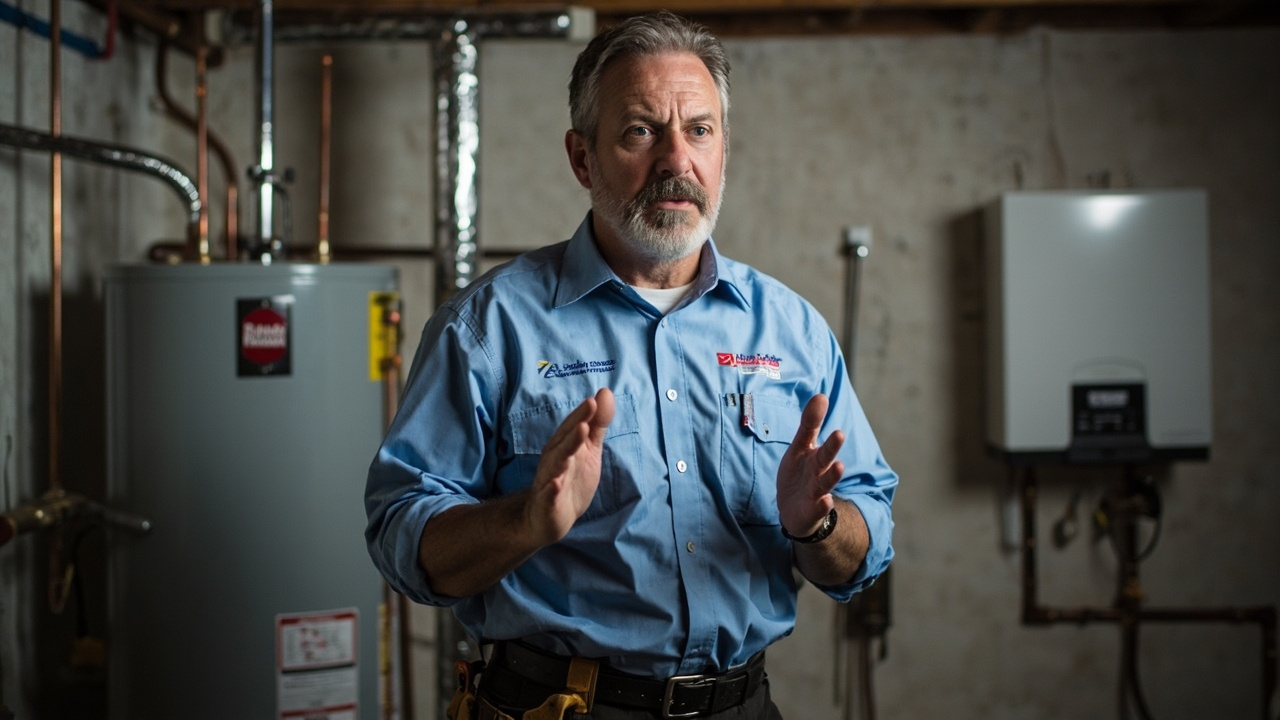
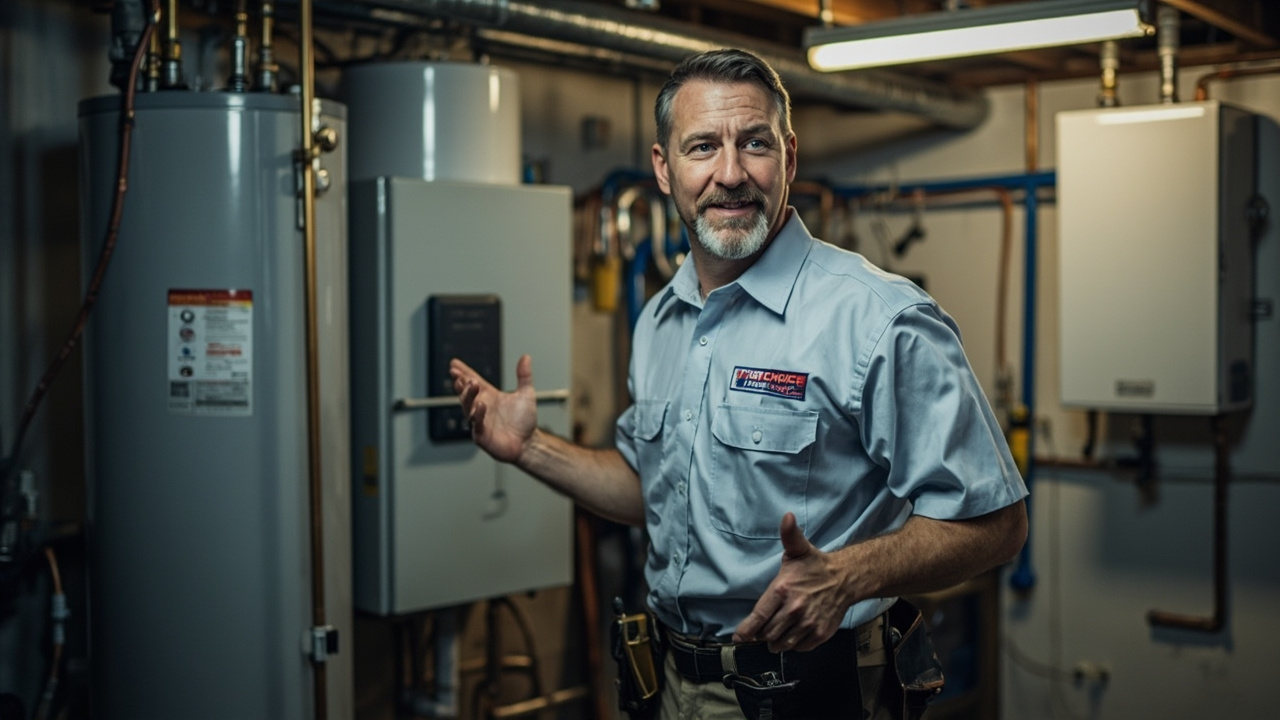

Columbus municipal water averages 12 to 15 grains per gallon hardness, which is considered moderately hard to hard. This mineral content causes calcium carbonate scale formation inside tank heaters and on tankless heat exchangers. Standard tank heaters handle this better because lower operating temperatures reduce scale formation rate. Tankless units operate at higher temperatures, which accelerates mineral precipitation. Homes on well water in outer Franklin County suburbs face even higher mineral concentrations. Winter groundwater temperatures drop to 45 degrees, which forces tankless units to work harder and reduces output flow rate by 25 to 30 percent compared to summer performance.
We work throughout Columbus's diverse housing stock, from historic neighborhoods with century-old plumbing to new construction in Westerville and Grove City. This experience teaches us which water heater type fits which home configuration without expensive modifications. We understand Franklin County's plumbing code requirements and work directly with city inspectors for permit approvals. Local expertise matters because a system that works in Arizona or Florida may fail in Columbus's climate and water conditions. We match technology to local conditions, not national marketing trends.