Designing a Functional Plumbing Layout for Your New Clintonville Backyard Carriage House
Building a backyard carriage house in Clintonville requires careful plumbing planning to meet Columbus building codes while ensuring long-term reliability. The right layout connects your new structure to existing utilities without compromising water pressure, drainage, or code compliance. Whether you’re creating a rental unit, home office, or guest space, understanding local requirements and technical considerations will save you time and prevent costly rework. Columbus Department of Public Utilities.
Understanding Clintonville ADU Plumbing Requirements
Clintonville’s established neighborhoods feature homes built between the 1920s and 1960s with aging infrastructure. Most properties sit on lots between 4,500 and 7,000 square feet, making efficient plumbing design critical for backyard structures. The City of Columbus requires separate permits for ADU plumbing, including detailed plans showing fixture counts, pipe sizing, and connection points to existing systems.
Local soil conditions in Clintonville consist of heavy clay that expands and contracts with moisture changes. This movement affects underground pipe stability and requires proper bedding material and trench depth to prevent future breaks. The area’s mature tree canopy also means careful route planning to avoid root interference with sewer lines.
Navigating Columbus Building Codes and Permits
The City of Columbus Department of Building and Zoning Services enforces specific requirements for ADU plumbing installations. All new plumbing must comply with the Ohio Plumbing Code, which references the International Plumbing Code with state modifications. Clintonville properties typically fall under Zone 3 zoning, allowing accessory structures up to 1,000 square feet with proper setbacks. Ohio Plumbing Code.
Permit processing through the Columbus DPU takes 2-3 weeks for standard ADU applications. Plans must include fixture unit calculations, pipe material specifications, and backflow prevention devices where required. The city mandates 18-inch minimum trench depth for water lines in residential applications to protect against frost heave during Central Ohio winters. Your Best Options for Fast Water Heater Replacement in Dublin.
Key Code Requirements:
- Minimum 3/4-inch water service line for ADUs with more than two fixtures
- 4-inch main sewer line connection with cleanout access
- Backflow preventer on all potable water connections
- Proper venting for all fixtures per IPC Table 906.1
Sewer Line Connection Options for Clintonville ADUs
Connecting your carriage house to the existing sewer system requires evaluating your primary residence’s main line capacity. Clintonville’s combined sewer system, managed by the Columbus Department of Public Utilities, handles both sanitary and stormwater flow. Most Clintonville homes built before 1970 connect to clay tile sewer lines that may have limited capacity for additional fixtures. Water Heater Maintenance Tips.
Connection Methods:
- Tap Existing Main Line
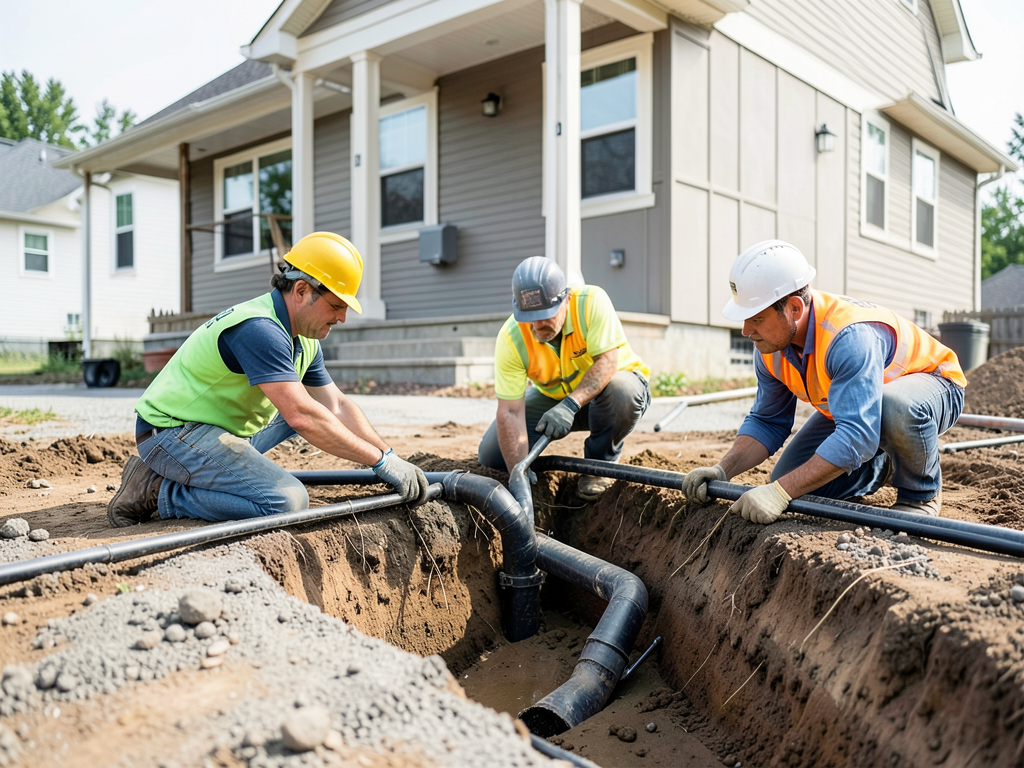
Most cost-effective option if primary line has adequate capacity. Requires excavation to existing cleanout and installation of a wye fitting. Cost ranges $1,200-2,500 depending on accessibility.
- Install New Lateral
Required when existing line cannot handle additional flow. Involves trenching to street connection point. Cost $3,000-5,000 including permits and inspection.
- Up-Flush System
Macerating pump system for below-grade installations where gravity drainage isn’t possible. Cost $2,500-4,000 including electrical work.
Testing your existing sewer line capacity involves a camera inspection to check for blockages, root intrusion, or collapsed sections. Clintonville’s mature trees often cause root damage to older clay pipes, making capacity assessment critical before adding new fixtures.. Read more about Adding a Modern Dog Wash Station to Your Columbus Mudroom or Garage (What You Need to Know).
Water Service Sizing and Pressure Considerations
Clintonville homes typically receive water from the Columbus City Water system at pressures between 40-60 PSI. Adding a carriage house requires calculating total fixture units to ensure adequate pressure and flow. A typical ADU with kitchen, bathroom, and laundry needs 12-15 fixture units, requiring a minimum 3/4-inch service line. Water Stains on Ceiling or Walls.
Water pressure drops occur when multiple fixtures operate simultaneously. The formula for pressure loss uses pipe length, diameter, and fixture count. For a 50-foot run from main house to carriage house, 3/4-inch PEX maintains adequate pressure for simultaneous use, while 1/2-inch would cause noticeable flow reduction.
Water Line Materials Comparison:
| Material | Cost per Foot | Installation Notes | Best Use |
|---|---|---|---|
| PEX (cross-linked polyethylene) | $0.50-0.80 | Flexible, freeze-resistant, easy to install | Most ADU applications |
| Copper Type L | $2.50-3.50 | Durable, code-approved, higher cost | Exposed runs, high-end finishes |
| PVC Schedule 40 | $0.30-0.50 | For cold water only, UV sensitive | Buried runs, budget projects |
Temperature fluctuations in Clintonville reach -10°F in winter and 95°F in summer. PEX’s flexibility accommodates these changes without cracking, while copper requires expansion joints at connection points to prevent stress failures.
Venting Strategies for Small Space Plumbing
Proper venting prevents trap siphoning and maintains trap seals in your carriage house plumbing. The International Plumbing Code requires vents for all fixtures, but space constraints in small ADUs require creative solutions. Clintonville’s building setbacks limit roof penetrations, making horizontal wet venting a practical option.
Venting Options:
- Individual vents for each fixture (traditional but space-intensive)
- Wet venting where fixtures share vent paths
- Air admittance valves (studor vents) for single fixtures
- Combination waste and vent (CWAV) systems for compact layouts
Air admittance valves work well for isolated fixtures like a powder room or bar sink. These one-way valves allow air in but prevent sewer gas escape. However, Columbus code limits AAVs to specific applications and requires accessible installation for maintenance.
Water Heater Selection for ADU Applications
Space constraints in carriage houses make traditional 40-gallon water heaters impractical. Tankless water heaters provide endless hot water while freeing valuable floor space. For a typical ADU with one bathroom and kitchen, a 7-9 gallon per minute tankless unit handles simultaneous shower and sink use. Is Upgrading to a Tankless Water Heater Worth It for Hilliard Homeowners?.
Water Heater Comparison:
| Type | Space Required | Installation Cost | Operating Cost |
|---|---|---|---|
| Tankless Gas | 2 sq ft wall mount | $1,800-2,500 | $15-20/month |
| Tankless Electric | 2 sq ft wall mount | $1,200-1,800 | $20-25/month |
| Compact Tank | 18″ x 18″ floor | $800-1,200 | $25-30/month |
Gas tankless units require proper venting and gas line sizing. Clintonville homes typically have 1/2-inch gas service, which may need upgrading to 3/4-inch for tankless applications. Electric units avoid venting requirements but need dedicated 240-volt circuits.
Backflow Prevention and Cross-Connection Control
Franklin County Health Department requires backflow prevention devices on all new plumbing connections to protect the public water supply. Clintonville’s older homes may lack proper protection, making ADU additions an opportunity to upgrade the entire system. Backflow preventers stop contaminated water from flowing backward into clean supply lines.
Types of backflow prevention include:
- Reduced pressure zone (RPZ) assemblies for high-hazard applications
- Double check valve assemblies for moderate hazard
- Hose bib vacuum breakers for outdoor connections
RPZ assemblies require annual testing by certified testers. The testing ensures the internal check valves function properly and maintain the required pressure differential. Clintonville properties with irrigation systems or boilers need RPZ protection regardless of ADU construction.
Winterization Strategies for Year-Round Use
Clintonville experiences 3-4 freeze-thaw cycles annually that stress plumbing systems. Proper insulation and freeze protection prevent costly damage. Exterior water lines need R-4 minimum insulation, while interior pipes in unconditioned spaces require R-6 or higher.
Freeze Protection Methods:
- Heat tape on exposed pipes with thermostat control
- Insulated pipe sleeves for buried runs
- Circulation pumps for long dead-end runs
- Self-regulating heat cables for variable protection
Heat tape installation requires GFCI protection and proper thermostat placement to prevent overheating. The National Electrical Code Article 422.11 requires heat tape to be installed per manufacturer specifications with accessible controls and indicators.. Read more about How to Move a Bathroom in Your Schumacher Place Home Without Breaking the Bank on Plumbing Stacks.
Cost Factors for ADU Plumbing in Central Ohio
ADU plumbing costs vary based on distance from main house, soil conditions, and fixture complexity. Clintonville’s clay soil increases excavation time compared to sandy soils, while mature tree roots may require root barriers or alternative routing.
Cost Breakdown by Component:
- Main water line installation: $15-25 per foot
- Sewer connection: $1,200-5,000 depending on method
- Fixture rough-in: $300-500 per fixture
- Water heater installation: $1,200-2,500
- Backflow preventer: $300-800 plus annual testing
Permit fees through Columbus DPU average $250-400 for ADU plumbing, plus $100-200 for plan review. Inspection fees run $150-250 per visit, with most projects requiring 2-3 inspections during construction.
Project Timeline and Scheduling Considerations
ADU plumbing projects in Clintonville typically span 2-3 weeks from permit approval to final inspection. Weather delays are common during winter months when ground freezing affects excavation. Summer projects move faster but may face higher demand for contractors.
Typical Schedule:
- Permit acquisition: 2-3 weeks
- Excavation and rough-in: 2-3 days
- Inspection #1 (underground): 1-2 days after rough-in
- Finish plumbing: 3-5 days
- Final inspection: 1 day after completion
Scheduling inspections requires 48-hour notice to Columbus DPU. Missing an inspection appointment adds 1-2 weeks to the timeline as inspectors operate on fixed routes. Plan rough-in inspections early in the week to allow time for corrections before the weekend.
Maintenance Considerations for Long-Term Reliability
ADU plumbing requires regular maintenance to prevent issues common in Clintonville’s environment. Hard water from Central Ohio limestone aquifers causes mineral buildup in pipes and fixtures. Installing a water softener on the main line protects both primary residence and ADU plumbing.
Maintenance Schedule:
- Monthly: Check for leaks under sinks and around fixtures
- Quarterly: Test backflow preventer shutoff valves
- Annually: Professional drain cleaning and water heater flush
- Bi-annually: Inspect exterior pipes for damage or settling
Water pressure testing helps identify developing issues before they cause damage. Normal residential pressure ranges 40-80 PSI. Pressure above 80 PSI requires a pressure reducing valve to prevent fixture damage and leaks.
Frequently Asked Questions
Do I need a separate water meter for my ADU?
Separate meters aren’t required for ADUs in Clintonville, but they simplify billing if you plan to rent the space. Columbus DPU charges $450-600 for meter installation plus monthly base fees. Shared meters work fine for family use but complicate tenant billing.
How deep should water lines be buried in Clintonville?
Ohio code requires 18-inch minimum depth for residential water lines to protect against frost. In areas with poor drainage or near foundations, 24-inch depth provides extra protection. Use sand bedding around pipes to prevent damage from rocks or soil movement.
Can I use PEX for both hot and cold water lines?
Yes, PEX works for both hot and cold water distribution. Cross-linked polyethylene handles temperatures up to 200°F, making it suitable for hot water lines. PEX-A offers the best flexibility and freeze resistance, while PEX-B costs less but remains highly reliable for ADU applications.

Ready to Start Your Clintonville ADU Plumbing Project?
Designing functional plumbing for your backyard carriage house requires expertise in local codes, soil conditions, and efficient layout planning. Our team understands Clintonville’s unique challenges and can help you navigate the permitting process while ensuring your new space has reliable, code-compliant plumbing.
Call (614) 707-7373 today to schedule your ADU plumbing consultation. We’ll evaluate your property, discuss your options, and provide a detailed plan that meets your needs and budget. Don’t let plumbing complications delay your backyard project – get expert guidance from the start.
Frequently Asked Questions
How long does ADU plumbing installation take?
Most ADU plumbing projects in Clintonville take 2-3 weeks from permit approval to final inspection, depending on weather and inspection schedules.
What’s the average cost for ADU plumbing in Clintonville?
ADU plumbing costs typically range $8,000-15,000 depending on distance from main house, soil conditions, and fixture complexity.
Do I need special permits for ADU plumbing?
Yes, the City of Columbus requires separate plumbing permits for ADUs, including detailed plans and inspections throughout construction.
You may also find this helpful. Comparing Rheem and Bradford White Water Heaters for Your South Linden Rental Property.
You may also find this helpful. Why Hydronic Radiant Floor Heating is the Ultimate Luxury Upgrade for Olentangy Valley Basements.
{
“@context”: “https://schema.org”,
“@type”: “BlogPosting”,
“headline”: “Designing a Functional Plumbing Layout for Your New Clintonville Backyard Carriage House”,
“description”: “Learn Clintonville ADU plumbing codes, sewer tie-ins, and water heater options. Expert guide for backyard carriage houses in Columbus Ohio.”,
“wordCount”: 1865,
“datePublished”: “2026-05-20T08:29:00.000Z”,
“dateModified”: “2026-05-20T08:29:00.000Z”,
“inLanguage”: “en-US”,
“mainEntityOfPage”: {
“@type”: “WebPage”,
“@id”: “https://firstchoiceplumbingcolumbus.com”
},
“publisher”: {
“@type”: “LocalBusiness”,
“name”: “First Choice Plumbing Columbus”,
“url”: “https://firstchoiceplumbingcolumbus.com”
},
“author”: {
“@type”: “Organization”,
“name”: “First Choice Plumbing Columbus”,
“url”: “https://firstchoiceplumbingcolumbus.com”
},
“image”: {
“@type”: “ImageObject”,
“url”: “https://firstchoiceplumbingcolumbus.com/wp-content/uploads/2026/03/designing-a-functional-plumbing-layout-for-your-ne-1.png”
}
}
{
“@context”: “https://schema.org”,
“@type”: “Plumber”,
“name”: “First Choice Plumbing Columbus”,
“url”: “https://firstchoiceplumbingcolumbus.com”,
“address”: {
“@type”: “PostalAddress”,
“addressLocality”: “Columbus”
},
“areaServed”: {
“@type”: “City”,
“name”: “Columbus”
}
}
{
“@context”: “https://schema.org”,
“@type”: “FAQPage”,
“mainEntity”: [
{
“@type”: “Question”,
“name”: “Do I need a separate water meter for my ADU?”,
“acceptedAnswer”: {
“@type”: “Answer”,
“text”: “Separate meters aren’t required for ADUs in Clintonville, but they simplify billing if you plan to rent the space. Columbus DPU charges $450-600 for meter installation plus monthly base fees. Shared meters work fine for family use but complicate tenant billing.”
}
},
{
“@type”: “Question”,
“name”: “How deep should water lines be buried in Clintonville?”,
“acceptedAnswer”: {
“@type”: “Answer”,
“text”: “Ohio code requires 18-inch minimum depth for residential water lines to protect against frost. In areas with poor drainage or near foundations, 24-inch depth provides extra protection. Use sand bedding around pipes to prevent damage from rocks or soil movement.”
}
},
{
“@type”: “Question”,
“name”: “Can I use PEX for both hot and cold water lines?”,
“acceptedAnswer”: {
“@type”: “Answer”,
“text”: “Yes, PEX works for both hot and cold water distribution. Cross-linked polyethylene handles temperatures up to 200°F, making it suitable for hot water lines. PEX-A offers the best flexibility and freeze resistance, while PEX-B costs less but remains highly reliable for ADU applications.”
}
},
{
“@type”: “Question”,
“name”: “Ready to Start Your Clintonville ADU Plumbing Project?”,
“acceptedAnswer”: {
“@type”: “Answer”,
“text”: “Designing functional plumbing for your backyard carriage house requires expertise in local codes, soil conditions, and efficient layout planning. Our team understands Clintonville’s unique challenges and can help you navigate the permitting process while ensuring your new space has reliable, code-compliant plumbing.\n\nCall (614) 707-7373 today to schedule your ADU plumbing consultation. We’ll evaluate your property, discuss your options, and provide a detailed plan that meets your needs and budget. Don’t let plumbing complications delay your backyard project – get expert guidance from the start.”
}
}
]
}
{
“@context”: “https://schema.org”,
“@type”: “HowTo”,
“name”: “Sewer Connection Options”,
“step”: [
{
“@type”: “HowToStep”,
“position”: 1,
“name”: “Tap Existing Main Line”,
“text”: “Most cost-effective option if primary line has adequate capacity. Requires excavation to existing cleanout and installation of a wye fitting. Cost ranges $1,200-2,500 depending on accessibility.”
},
{
“@type”: “HowToStep”,
“position”: 2,
“name”: “Install New Lateral”,
“text”: “Required when existing line cannot handle additional flow. Involves trenching to street connection point. Cost $3,000-5,000 including permits and inspection.”
},
{
“@type”: “HowToStep”,
“position”: 3,
“name”: “Up-Flush System”,
“text”: “Macerating pump system for below-grade installations where gravity drainage isn’t possible. Cost $2,500-4,000 including electrical work.”
}
],
“image”: “https://firstchoiceplumbingcolumbus.com/wp-content/uploads/2026/03/designing-a-functional-plumbing-layout-for-your-ne-1.png”
}
{
“@context”: “https://schema.org”,
“@type”: “BreadcrumbList”,
“itemListElement”: [
{
“@type”: “ListItem”,
“position”: 1,
“name”: “Home”,
“item”: “https://firstchoiceplumbingcolumbus.com”
},
{
“@type”: “ListItem”,
“position”: 2,
“name”: “Blog”,
“item”: “https://firstchoiceplumbingcolumbus.com/blog”
},
{
“@type”: “ListItem”,
“position”: 3,
“name”: “Designing a Functional Plumbing Layout for Your New Clintonville Backyard Carriage House”
}
]
}
{
“@context”: “https://schema.org”,
“@type”: “Service”,
“serviceType”: “Plumbing”,
“provider”: {
“@type”: “LocalBusiness”,
“name”: “First Choice Plumbing Columbus”,
“url”: “https://firstchoiceplumbingcolumbus.com”
},
“areaServed”: {
“@type”: “City”,
“name”: “Columbus”
},
“description”: “Learn Clintonville ADU plumbing codes, sewer tie-ins, and water heater options. Expert guide for backyard carriage houses in Columbus Ohio.”
}